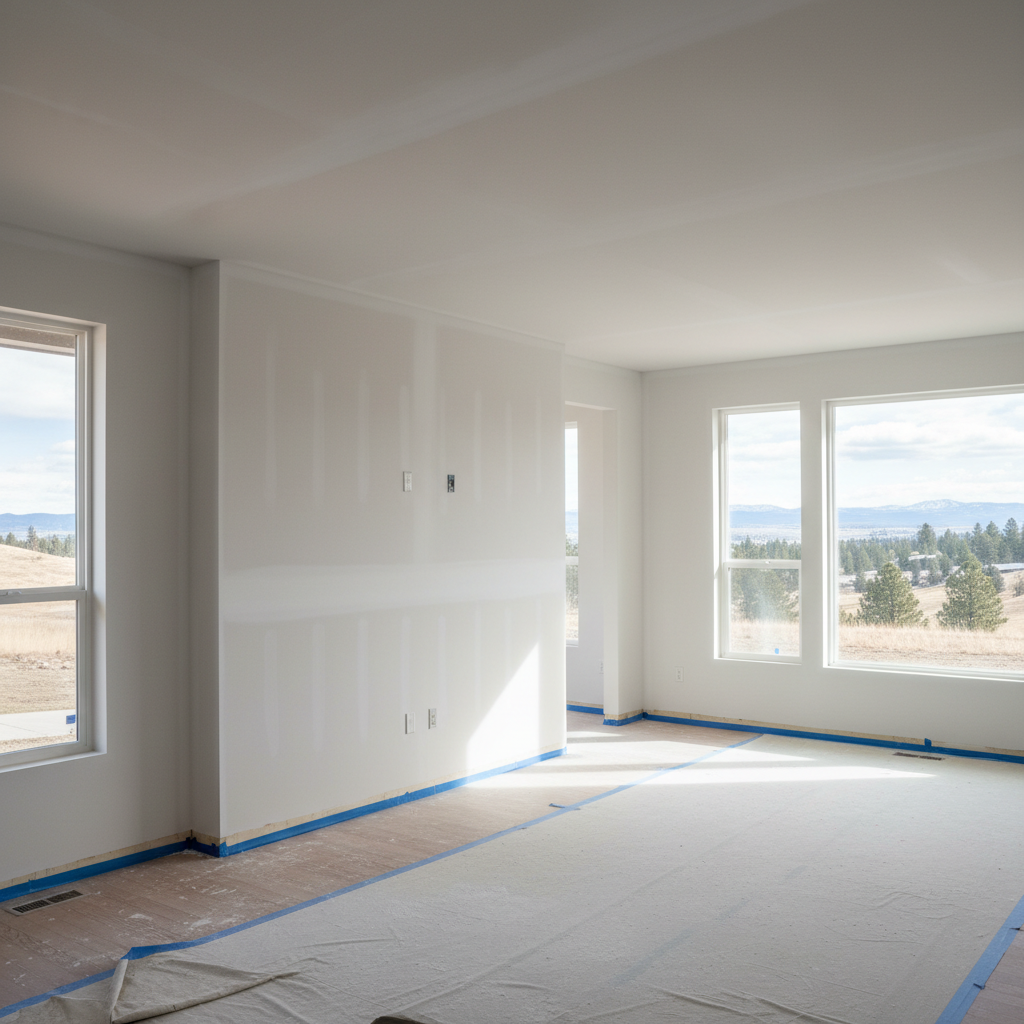
So, you've just put up new drywall, or maybe you've finished some repairs. Before any paint touches those walls, you've got a crucial step: priming. Seriously, don't skip it. Priming isn't just some extra chore; it's absolutely vital for a good, long-lasting paint job, especially on brand-new drywall. But what's that going to set you back here in Spokane?
What Makes Drywall Priming Costs Go Up or Down?
A few things really sway the price when it comes to priming. It's not just about slapping some primer on the wall, you know? There's more to it.
- Surface Area (Square Footage): This is the big one, obviously. More wall and ceiling means more primer and more time for the crew. We usually quote by the square foot for priming jobs.
- Condition of the Drywall: Is it fresh, perfectly smooth drywall? Or is it an older wall with a bunch of patches, maybe some texture that needs sealing, or even smoke damage? A rougher, more porous, or stained surface might need a special primer, or even two coats, which definitely adds to the cost.
- Type of Primer Used: Not all primers are the same. A basic PVA (polyvinyl acetate) primer for new drywall is usually the cheapest option. But if you're dealing with water stains, smoke odors, or need to cover up a really dark color, you'll need a specialized stain-blocking or odor-sealing primer. Those cost more per gallon.
- Accessibility: High ceilings, tight corners, or rooms packed with furniture that needs moving will eat up more labor time. If we're lugging ladders around a bunch of stuff, it's just going to take longer, right?
- Number of Coats: Most new drywall only needs one good, solid coat of quality primer. But if the drywall is super absorbent, or if you're going from a very dark color to a very light one, we might suggest a second coat.
What You Can Expect to Pay in Spokane, WA
Alright, let's talk real numbers. For just priming new, clean drywall—think a fresh installation—you're typically looking at around $0.50 to $1.00 per square foot. That covers both the labor and the materials, including a quality PVA primer and one thorough coat.
So, for a standard 12x12 foot room (that's about 48 linear feet of wall, assuming 8-foot ceilings, which works out to roughly 384 sq ft of wall space, plus maybe 144 sq ft ceiling for a total of 528 sq ft), you might pay anywhere from $264 to $528 just for the priming. If it's a whole house, say 1,500 square feet of floor space, you're probably looking at around 4,500 square feet of wall and ceiling area. That could put you in the range of $2,250 to $4,500.
Now, if you need specialized primers—like a shellac-based one for heavy smoke damage from a fireplace that wasn't properly vented, or an oil-based primer for really tough stains—the cost per square foot could jump to $1.25 to $2.00+. These primers are pricier to buy and often take more time to apply and clean up, too.
What Should Be in Your Quote?
When you get a quote from us at Done Right Spokane Drywall, or any other reputable contractor, here's what you should expect to see listed:
- Material Costs: This covers the primer itself, masking tape, drop cloths, and other supplies.
- Labor Costs: The time it takes for all the prep work, applying the primer, and cleaning up afterward.
- Surface Preparation: Light sanding of any mudded areas, dusting, and making sure the surface is clean and ready to go.
- Protection: Covering floors, furniture, and fixtures with drop cloths and masking tape.
- One Coat of Primer: Unless we've talked about and agreed on something different, it's usually for one solid coat.
- Clean-up: Taking away all our materials and leaving the area tidy.
How to Avoid Overpaying
First off, get several quotes. Don't just go with the first person who calls you back, okay? Make sure each quote is detailed and clearly separates materials from labor. Ask questions if something doesn't make sense. For instance, if someone quotes you way less than everyone else, ask what kind of primer they're using and if they're actually doing proper prep work. You definitely don't want them thinning the primer or skipping steps just to be cheaper.
Also, be super clear about the job's scope. If you've got some old water stains in your attic from a leaky roof (pretty common here with our winter snows melting), make sure you point those out. Don't assume the contractor will notice every little thing. Being upfront about your walls' condition means you'll get a more accurate quote and no nasty surprises later.
And remember, the cheapest quote isn't always the best deal. A good priming job truly sets the stage for a beautiful, long-lasting paint finish. Skimping now could mean your paint peels or looks splotchy in a year or two, costing you more in the long run. Think of it as an investment in how your home will look for years to come.