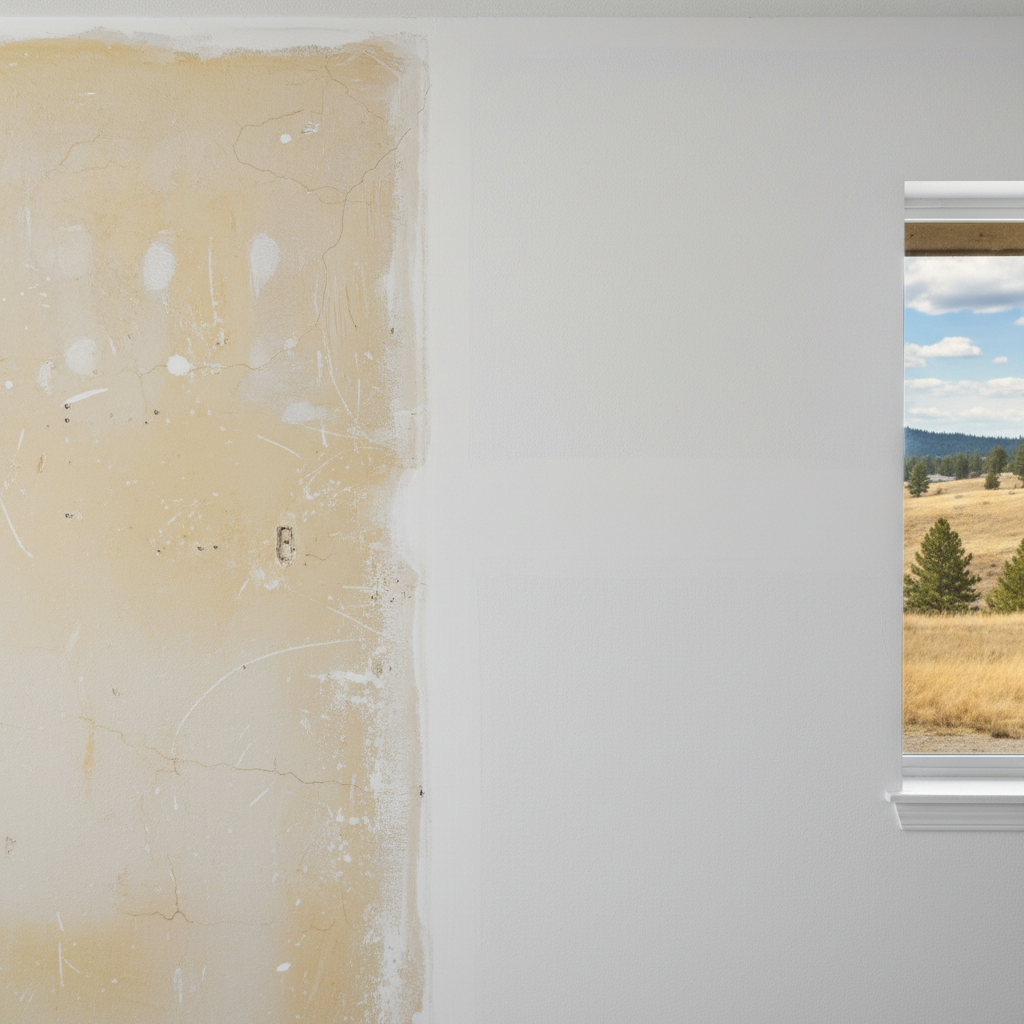
So, you've got a hole in your drywall. Maybe a doorknob went a little too far, or a picture hook missed its mark. Perhaps the kids got a bit too rowdy, you know how it goes. Whatever the reason, you're now staring at a repair job. When it comes to fixing drywall, you generally have two main choices: a quick, surface-level patch, or cutting out the damaged bit and putting in a new piece.
Which one makes sense for you? It's not always about picking the cheapest or fastest way. Let's really look at both options, because what works for a tiny nail pop might not cut it for a bigger problem—especially with our Spokane weather and those charming older homes we have around here.
The Quick Fix: Spackle, Mesh, and Patch Kits
This is probably what most people picture when they hear "drywall repair." It's all about using spackle, joint compound, or those peel-and-stick mesh patches to cover up small flaws. Think nail holes, little cracks, or minor scuffs. Definitely the DIY-friendly choice.
Cost & Time:
- Low cost: You can grab a tub of spackle or a small patch kit for under twenty bucks at just about any hardware store.
- Fast: Most of these fixes are done in an hour or two, not counting the drying time between coats. Often, you can even paint over them the same day.
Durability & Appearance:
- Limited durability: These are really just surface fixes. They're fine for cosmetic stuff, but they don't actually make the wall stronger. If a crack's underlying cause isn't fixed, it'll probably pop up again. And for a bigger hole, a mesh patch can feel a bit flimsy if you push on it.
- Can look good (for small stuff): For tiny holes or hairline cracks, a well-sanded and painted patch can blend in perfectly. But for anything bigger than a quarter, you might notice a slight bulge or uneven texture if you're not super careful with your sanding and feathering.
When I'd Recommend It:
If you're dealing with a tiny ding, a small nail hole, or a hairline crack that isn't structural, go for it. It's great for quick touch-ups before selling a house, or if you just need to cover up something minor in a spot that doesn't get much traffic. It's also your best bet for fixing those small stress cracks that sometimes show up around windows in older South Hill homes as the foundation settles a bit, you know?
The Section Replacement: Cut, Fit, Mud, Finish
This is the tougher, more lasting approach. It means cutting out the damaged section of drywall, fitting a new piece in, taping the seams, putting on multiple coats of joint compound (that's "mud" to us pros), sanding, and then matching the texture. This is exactly what we do at Done Right Spokane Drywall for anything more serious than just a cosmetic blemish.
Cost & Time:
- Higher cost: You're paying for materials like new drywall, tape, and mud. Plus, if you hire a pro, you're paying for their labor and know-how. It's just a more involved process.
- More time: This isn't a one-hour job, not by a long shot. There's cutting, fitting, and then multiple coats of mud, each needing time to dry. You're usually looking at least two days, often three, for a proper job—especially if you need texture matching.
Durability & Appearance:
- Excellent durability: When we do it right, a section replacement is just as strong and sturdy as the rest of the wall. You're essentially putting in a brand new piece of the wall.
- Seamless appearance: The whole point here is for the repair to vanish completely. With proper taping, mudding, sanding, and texture matching, you shouldn't be able to tell there was ever a repair. This is where a good drywall contractor's skill really shines.
When I'd Recommend It:
Any hole bigger than a few inches across, water damage, impact damage that's crushed the drywall, or cracks that are wide, long, or keep coming back. If you've got a soft spot in the wall from moisture, or a significant hole from moving furniture, this is definitely the way to go. It's also the only real option if you're dealing with mold and need to cut out the affected drywall entirely. You want a repair that lasts and blends in, especially in high-visibility areas like your living room or kitchen, right?
My Recommendation for Spokane Homeowners
Look, for a small nail hole or a tiny scuff, grab some spackle. You'll be fine. But for anything bigger than a golf ball, or if you want a repair that truly disappears and holds up, you really need to go with a section replacement. Especially in our climate, with its freeze-thaw cycles and sometimes damp basements, you want a repair that's solid and won't fail you down the line.
Trying to patch a larger hole with just mesh and mud often leads to a visible, weak spot. You'll end up frustrated, and you'll likely call someone like us to fix it properly anyway. Save yourself the headache and do it right the first time. A professional section replacement might cost more upfront, but it's a long-term solution that maintains your home's integrity and looks.
If you're unsure which route to take, or if you've got a repair that looks a bit daunting, don't hesitate to give us a call at Done Right Spokane Drywall. We're happy to take a look and give you an honest assessment.