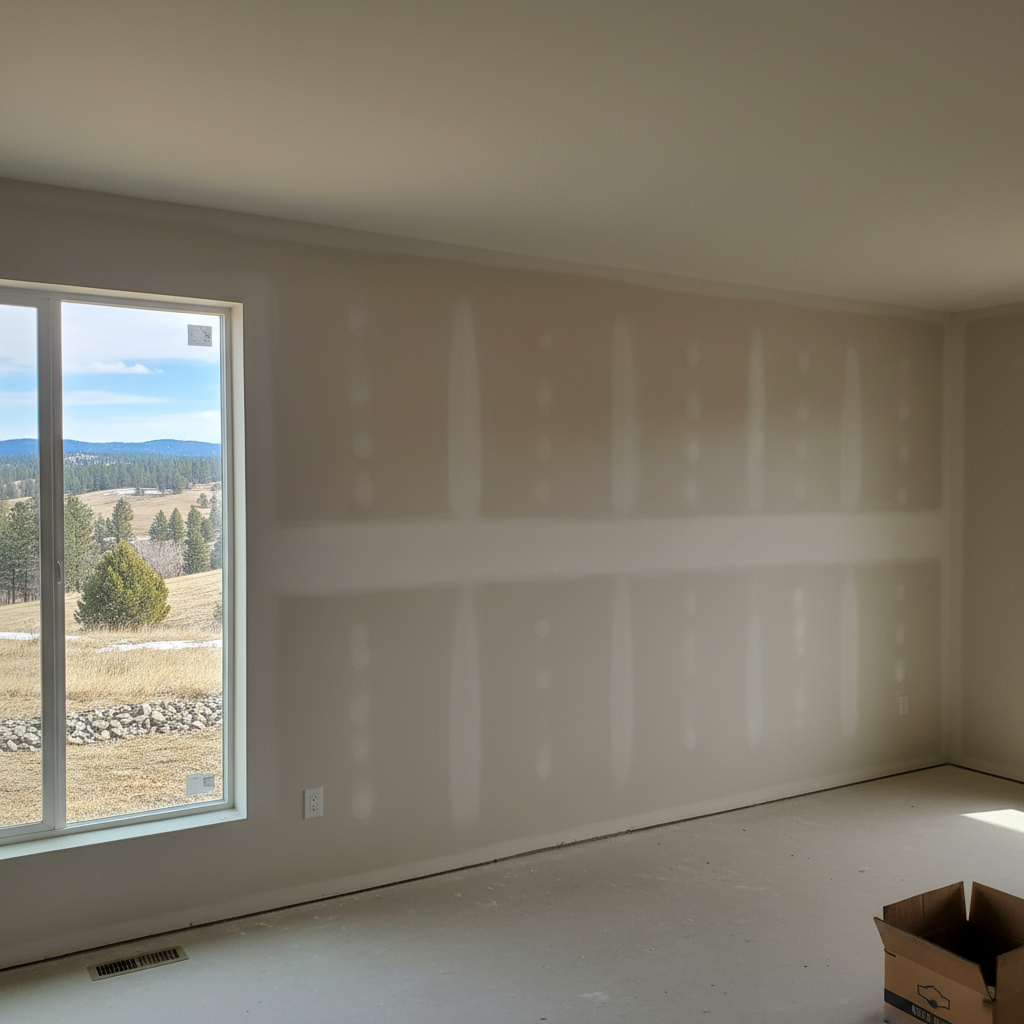
Drywall tape and joint compound are not invincible, especially around here.
If you live in Spokane, you already know our climate puts houses through very tough conditions. We get freezing, damp winters up on the South Hill and blistering, dry summer heat down in the valley that makes the air feel like an oven. That constant swing in temperature and humidity causes wood framing to shift and expand. When the framing moves, your drywall moves right along with it. If the taping and mudding was not done right in the first place, or if you are not paying attention to basic upkeep, those joints are going to start showing cracks.
What Regular Maintenance Looks Like
You do not need to spend every weekend inspecting your walls, but a quick walk-through twice a year goes a long way. Check the corners of your rooms and above doorways, because that is where stress concentrates first. Keep an eye on humidity levels inside your house during those deep winter freezes. If your windows are sweating constantly, your drywall is soaking up that extra moisture, which softens the joint compound and leads to sagging tape. Run your bathroom fans and use dehumidifiers if you are down near the Spokane River where moisture hangs heavy in the air.
Dust your walls gently and avoid slamming doors. It sounds simple, but constant heavy vibrations from slamming doors rattle house framing and crack brittle, old mud joints. When you do hang pictures, use proper anchors instead of just jamming a nail into a random spot, which can shatter the surrounding joint compound.
Warning Signs of Failing Tapes and Mud
Hairline cracks right down the middle of a seam are the classic red flag. They usually mean the paper tape is letting go or the mud layer was applied too thin over a high-stress joint. If you notice a dull, hollow sound when you tap on a wall, that is a dead giveaway that the tape has bubbled or delaminated from the drywall underneath. Another big warning sign is yellowing or brownish discoloration near seams, which usually points to a slow roof leak or severe condensation rolling down an exterior wall.
When to Call a Professional
You can slap some spackle on a tiny nail hole and call it a day. But if you are looking at long, jagged cracks spiderwebbing across your living room ceiling, DIY fixes usually just make things look worse. Mudding is an art that takes years to master, and feathering a patch so it completely disappears under a coat of paint is harder than it looks. Done Right Spokane Drywall is here to step in when those problems arise. Done Right Spokane Drywall spends our days fixing botched repairs and stabilizing joints so they actually hold up against our local weather. Give Done Right Spokane Drywall a call if the damage keeps coming back in the same spot, because that usually means there is a deeper structural shift happening behind the scenes that needs a pro's touch.