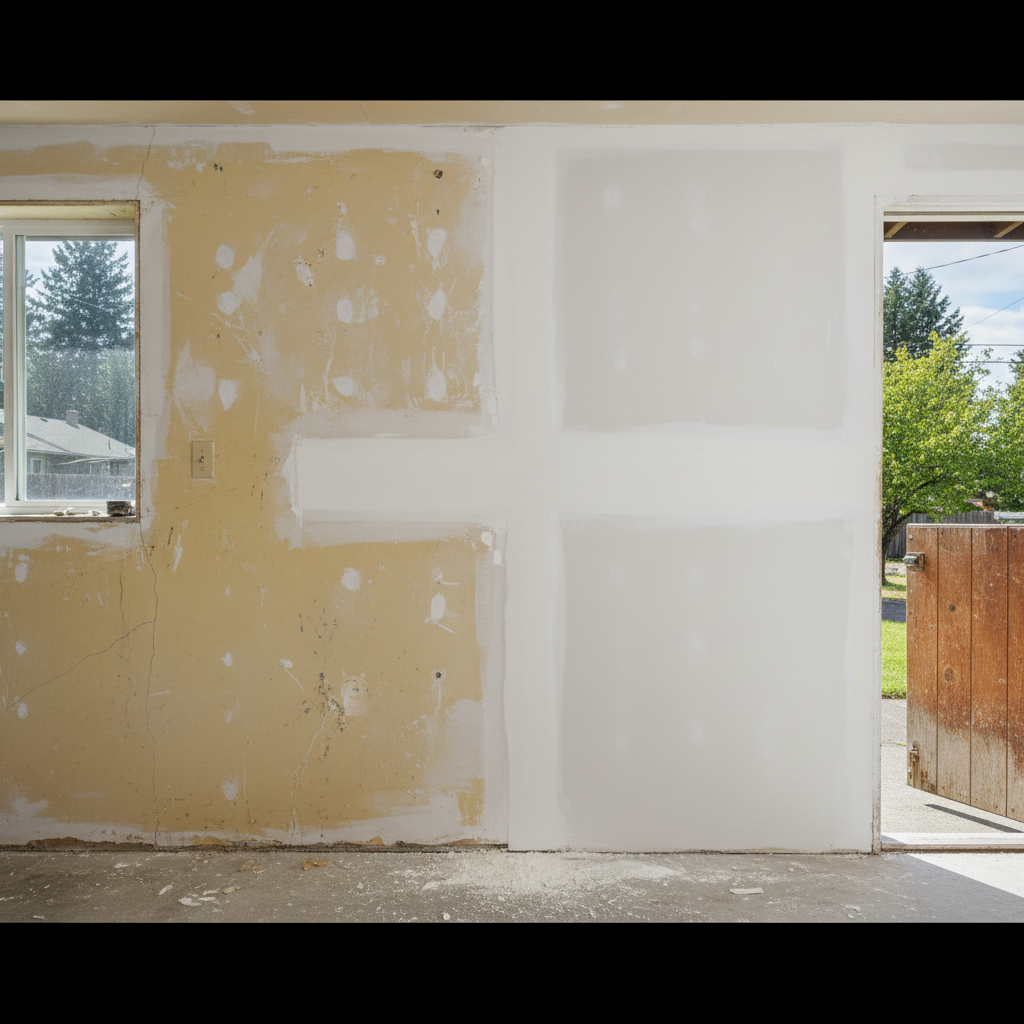
Got a nasty hole or a long crack in your drywall? It's a common problem, and when you're looking at it, you're probably wondering: do I just patch this thing up, or is it time to tear out the whole section and put in a new sheet? It’s a good question, and honestly, there’s no one-size-fits-all answer. As someone who’s been fixing drywall around Spokane for years, I've seen both approaches work great, and I've seen them fail spectacularly when chosen incorrectly.
Patching: The Quick Fix
Let's talk about patching first. This is usually what folks think of when they have a smaller ding or a nail pop. You're basically filling in the damaged area, maybe with a mesh patch and joint compound, or cutting out a small square and fitting in a new piece of drywall. It’s definitely the quicker, less invasive option.
Cost & Time
Patches are almost always cheaper. You're using less material, and it takes less time. If it's a small repair, like a doorknob hole or a stress crack near a window, you might be looking at an hour or two of work, plus drying time for the mud. Material costs are minimal – a small tub of mud, a patch kit, maybe a little sandpaper. For a DIYer, this is the most budget-friendly route.
Durability & Appearance
For small, isolated damage, a good patch can be incredibly durable. If done right, it'll hold up just as well as the surrounding wall. The trick is 'done right'. You need to feather out the mud properly so you don't see a hump, and the texture has to match. This is where a lot of DIY patches fall short. You end up with a visible square or a raised area that screams, “Hey, look at my patch!”
When Patching Makes Sense
- Small holes (less than 6 inches in diameter).
- Minor cracks that aren't structural.
- Damage that's not near a seam or corner.
- You're on a tight budget or timeline for a quick cosmetic fix.
Replacing a Section: The More Involved Solution
Now, let's talk about cutting out a larger section and replacing it with a new piece of drywall. This is a bigger job, no doubt about it. You're cutting back to studs, screwing in a fresh piece, taping the seams, and then mudding and finishing.
Cost & Time
This option is going to cost more, both in materials and labor. You're buying a larger sheet of drywall, more tape, more mud. It also takes longer. You've got the demolition, the cutting, the fitting, and then the multiple coats of mud and sanding. For a professional, it's a multi-day process because of drying times between coats. But sometimes, it's the only way to get a truly invisible repair.
Durability & Appearance
When you replace a section, you're essentially creating a new, seamless part of the wall. The durability is excellent because you're working with fresh, strong material and proper structural backing. The appearance, when done by someone who knows what they're doing, is usually superior. It's much easier to blend a new, larger section into the existing wall texture than it is to hide a small, lumpy patch.
When Replacement is the Way to Go
- Large holes or extensive damage (bigger than a dinner plate).
- Damage that spans multiple studs or is near a corner/ceiling joint.
- Water damage that has compromised the integrity of the drywall.
- You're dealing with old, brittle drywall that won't hold a patch well.
- You want the absolute best, most invisible repair possible, and you're willing to invest in it.
- Especially in older Spokane homes, like those in the South Hill or Browne's Addition, where the original plaster or drywall might be quite old and brittle, a full section replacement often yields a better, longer-lasting result than trying to patch crumbling material.
My Recommendation for Spokane Homeowners
Here's the deal: for most small, isolated dings or cracks that aren't growing, a well-done patch is perfectly fine. You can often tackle those yourself if you're handy, or call us for a quick fix. But if you’ve got something substantial – a hole from a plumbing repair, water damage from a leaky roof, or a long, spiderweb crack that just keeps coming back – you're almost always better off replacing that section.
Why? Because trying to patch extensive damage is often a waste of time and money. You'll spend hours trying to make it look right, only for the underlying issue or the sheer size of the damage to make the patch obvious or cause it to fail quickly. A proper section replacement, though more work up front, gives you a fresh start and a repair that you won't even notice once it's painted.
We do both types of repairs here at Done Right Spokane Drywall, and we're always happy to come out, take a look, and give you an honest assessment of what we think is the best approach for your specific situation. Don't hesitate to give us a call if you're staring at a damaged wall and wondering what to do.