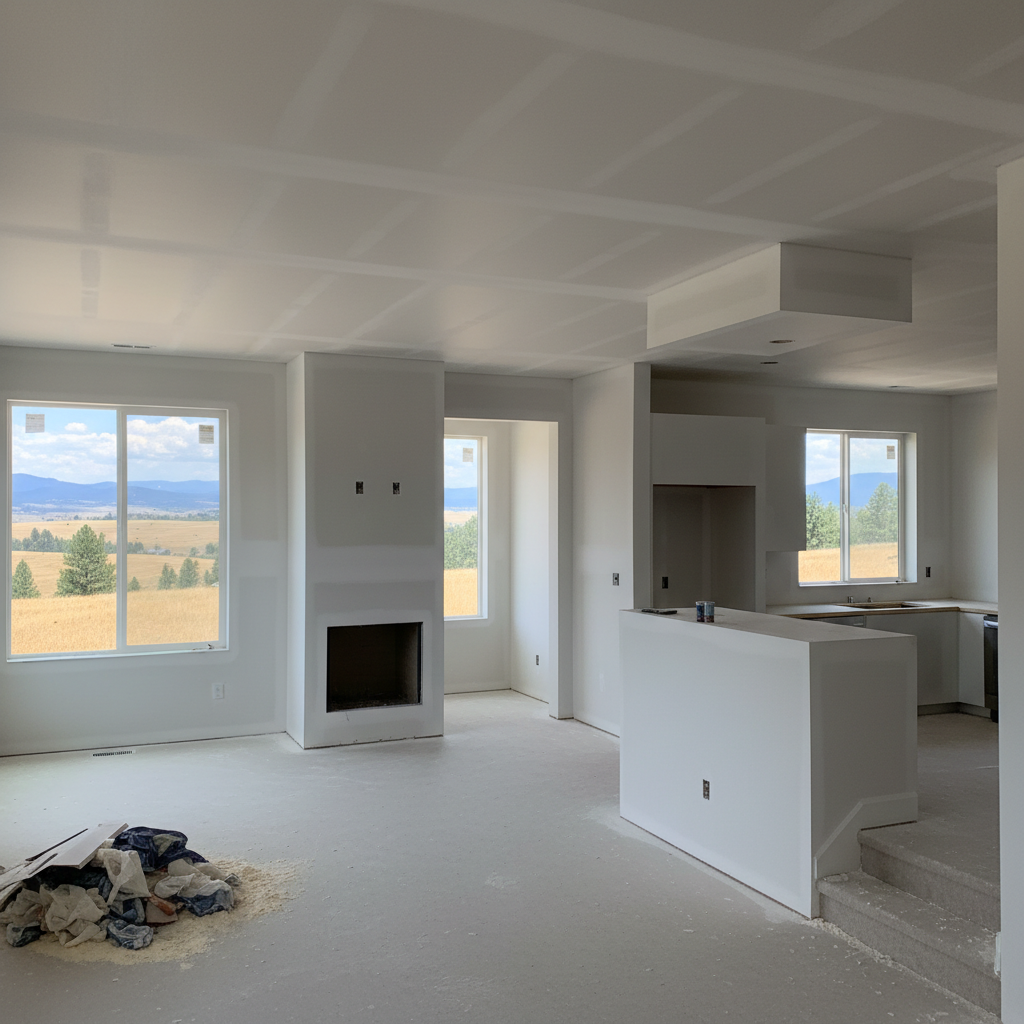
You’re ready to tackle that new addition, or maybe you’re finishing a basement, and sheetrock is on the horizon. Great! But hold on a second. From what I’ve seen over the years working on homes all over Spokane, from the South Hill to the Valley, there are some common pitfalls homeowners stumble into that can turn a straightforward sheetrock job into a real mess. Let’s talk about what to watch out for so you don’t end up regretting your choices.
Mistake #1: Not Getting Detailed Bids (And I Mean Detailed)
This is probably the biggest one. You call a few guys, they walk through, give you a number on a napkin, and you pick the cheapest one. Big mistake. A good contractor, like us at Done Right Spokane Drywall, will give you a breakdown. What kind of board are they using? Is it 1/2 inch or 5/8 inch? Is it mold-resistant in bathrooms? What about corner bead – metal or paper-faced? How many coats of mud? What level of finish? These details matter.
If a bid just says “install sheetrock” and gives you a single price, that’s a red flag. You need to know exactly what you’re paying for. Otherwise, you’re comparing apples to oranges, and the cheaper guy might be cutting corners you won't even realize until the paint goes on and the light hits it just right.
Mistake #2: Ignoring the Prep Work
Sheetrock goes up on framing, right? And that framing needs to be straight. I can’t tell you how many times I’ve shown up to a job where the homeowner or another contractor has done the framing, and it’s wavy, out of plumb, or the studs aren’t spaced correctly. Sheetrock isn’t magic; it won't fix bad framing. If your walls aren't flat, your sheetrock won't be flat, and your finished walls will look terrible. We can shim and float a bit, but there are limits.
Before any sheetrock crew shows up, walk the space with a straightedge. Check the studs, check the ceiling joists. Are they all in plane? Are there any major bows or twists? Address these issues before the sheetrock starts. It’s way cheaper to fix a crooked stud than to try and mud out a 1/2-inch dip over eight feet.
Mistake #3: Thinking All Drywall Is the Same
It’s not. You’ve got different thicknesses, different types for different applications. Standard 1/2-inch is common for walls. But for ceilings, especially if you’re spanning more than 16 inches between joists, you should really be using 5/8-inch to prevent sag. In bathrooms or other high-moisture areas, you need mold-resistant board – often called green board or purple board. For fire-rated walls, like between an attached garage and living space, you need Type X fire-rated drywall.
Don't just assume. Ask your contractor what type of board they plan to use in each area. If they can’t explain why they’re using a particular type, or if they just say “standard,” that’s a concern. You want the right material for the right job, especially with our damp Spokane winters sometimes leading to moisture issues if things aren't done right.
Mistake #4: Not Protecting Your Home (Or the Job Site)
Drywall is dusty. Incredibly dusty. And mudding generates even more dust. If you’re living in the house while work is being done, you need to seal off the work area as much as possible. Turn off your HVAC system in that zone, cover furniture, tape off doorways with plastic sheeting. A good contractor will do some of this, but it’s a shared responsibility.
Also, think about access. Is there a clear path for materials? Is the area clear of obstructions? We can’t work efficiently if we’re tripping over your kids’ toys or moving boxes every five minutes. A clean, organized site means a faster, smoother job and less chance of damage to your existing home.
Mistake #5: Rushing the Drying Time
This is a big one, especially in our climate. Drywall mud needs to dry. Really dry. Between coats, and especially before sanding and painting. If you rush it, you’re going to have problems. The mud can shrink, crack, or even bubble when painted, especially if there’s still moisture trapped underneath. I’ve seen it happen too many times.
Good contractors will factor in adequate drying time. They won't try to mud and sand a whole house in one day. If someone promises a ridiculously fast turnaround, be skeptical. Ask about their drying process. Do they use fans? Dehumidifiers if needed? Proper drying is crucial for a smooth, long-lasting finish.
Mistake #6: Not Checking References or Insurance
This should be a no-brainer, but people still skip it. Always, always check references. Ask to see previous work. And for goodness sake, make sure your contractor is licensed and insured. In Washington, that means a contractor’s license number. Ask for proof of liability insurance and workers’ compensation. If they don’t have it, or they hem and haw, walk away. You don’t want to be on the hook if someone gets hurt on your property or if there’s damage.
Hiring for sheetrock installation doesn't have to be a headache. By avoiding these common mistakes, you'll set yourself up for a much smoother project and a finish you'll be happy with for years to come.